Drinking Water Brings Relief to Dandakot: A Story of Transformation
Jajarkot: “In our time, we would stand in long queue at the public tap for two hours and return home with an empty jug, only to face our mother-in-law’s scolding,” recalls Gori Tamta from Dandakot, Junichande Rural Municipality-3, Jajarkot. “But today, life is different. We were poor, but our daughters-in-law are fortunate.”
Gori’s experience echoes the struggles of countless women in her village, where access to drinking water was once a daily battle. Tulsi, another resident of Dandakot, remembers the long queues at the only public tap in Sotikhola, where women from the entire village would gather, often returning empty-handed. The consequences at home were harsh, with scolding and the stress of managing without water for drinking, cooking, and feeding livestock. “Now, every home has its own tap,” Tulsi says with relief. “The younger generation of women is truly fortunate.”
The Water Crisis of the Past
Dandakot is home to 102 households, where access to water was historically limited. Before the 2022 earthquake, the village had 12 public taps, but only three were functional. When the earthquake struck on Kartik 17, it destroyed the village’s primary water source, forcing residents to rely on the Tusar River, a 30-minute walk away. The daily struggle to collect water disrupted household routines, and even children had to leave school to help fetch water.
A New Era of Accessibility
The story of Dandakot changed with the implementation of the Joint Recovery Action Plan. Through financial support from UNICEF and technical support of Chay Ya Nepal, a comprehensive drinking water, sanitation, and hygiene project was launched. Today, every household in the village has its own tap, along with three institutional taps.
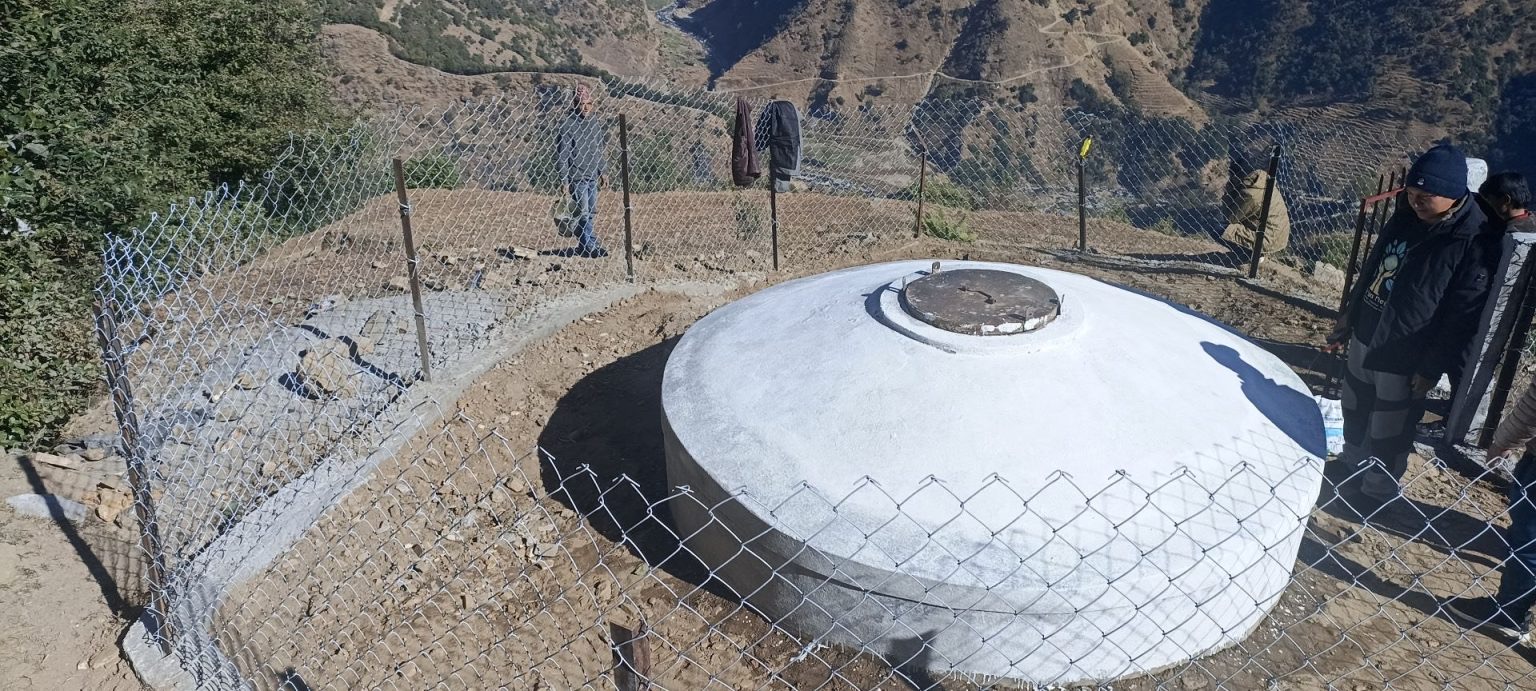
Resham Bahadur Khadka, Secretary of the Tusar Kholi Drinking Water Consumers’ Committee, confirms that the project has transformed the community by providing safe and accessible drinking water to 102 households. The initiative included the construction of two reservoir tanks with capacities of 12 and 8 cubic meters, ensuring a sustainable water supply for the village.
Relieving the Burden on Women
For the women of Dandakot, the greatest relief has been the end of the daily walk for water. “We no longer need to walk half an hour to the river or wait in line for water,” says Kali Rawat, another resident. “With taps in our courtyards, our time and energy are saved, and our children can focus on school instead of fetching water.”
The project, which cost a total of Rs. 4,199,739, was funded by UNICEF Nepal (Rs. 2,997,929), Junichande Rural Municipality (Rs. 411,682), and labor contributions from local residents (Rs. 790,126).
Beyond Water: A Holistic Approach
According to Surendra Bahadur Shahi, Project Manager of Chay Ya Nepal, this program was implemented to ensure access to safe drinking water and basic sanitation at both community and institutional levels. In addition, the organization has prioritized education, health, and technical support for safe housing in areas affected by the Jajarkot earthquake.
Meen Bahadur Rawal, Team Leader for Chay Ya Nepal in Karnali Province, emphasizes the importance of these programs in building resilience and improving living conditions for communities in Jajarkot and West Rukum.
A Brighter Future
The transformation of Dandakot is a testament to the power of collaboration and community-driven development. For women like Gori, Tulsi, and Kali, the taps in their courtyards symbolize not just convenience but a brighter future for their families. “We struggled, but our daughters-in-law live a life we only dreamed of,” says Gori. The story of Dandakot is one of hope, resilience, and the life-changing impact of access to clean water.
Photo Gallery